From grape quality and vintage to oak, fermentation and extraction, discover why the answer to almost every wine question is: it depends.
Welcome to the Room of Depends
There’s a room in every winery that doesn’t appear on the floor plan.
It has no sign on the door.
But sooner or later, every wine tour ends up there.
I call it the Room of Depends.
In Spanish, I call it la sala de depende.
Ask a winemaker almost any question and, sooner or later, you’ll find yourself standing inside it.
“Do you use oak?”
Depends.
“Do you ferment with whole bunches?”
Depends.
“Is old vine better?”
Depends.
“Do you filter your wine?”
Depends.
At first, it can sound like the winemaker is dodging the question.
They’re not.
They’re telling you the truth.
Because wine is annoyingly resistant to simple answers.
Take oak. Does oak make better wine?
Depends on the wine, the grape, the vintage, the amount of oak, the age of the barrels, the length of time in them, and, most importantly, what the winemaker is trying to achieve.
The same goes for almost everything.
Whole bunches can add freshness, perfume and structure. They can also add things you might not want. Sometimes the stems are ripe and useful. Sometimes they’re green and vegetal.
So the answer isn't whole bunches are good or whole bunches are bad.
It depends.
And then there are the grapes themselves.
A great winemaker can't turn mediocre grapes into a great wine simply by having a clever technique up their sleeve. They can make the best possible wine from what they've got, but the raw material matters.
If the fruit is perfectly ripe, healthy and balanced, the winemaker has options.
If the fruit arrives damaged, overripe, underripe or lacking acidity, suddenly those options start disappearing.
Which is why two winemakers can take the same grape variety, in the same region, and make wines that taste completely different.
And neither necessarily got it “wrong”.
They're making decisions.
That's the bit I think gets lost when we talk about wine as if there's a rulebook.
There isn't.
There are traditions, techniques, conventions and plenty of opinions masquerading as facts. But ultimately, wine is a series of decisions made in response to grapes.
And those grapes are different every year.
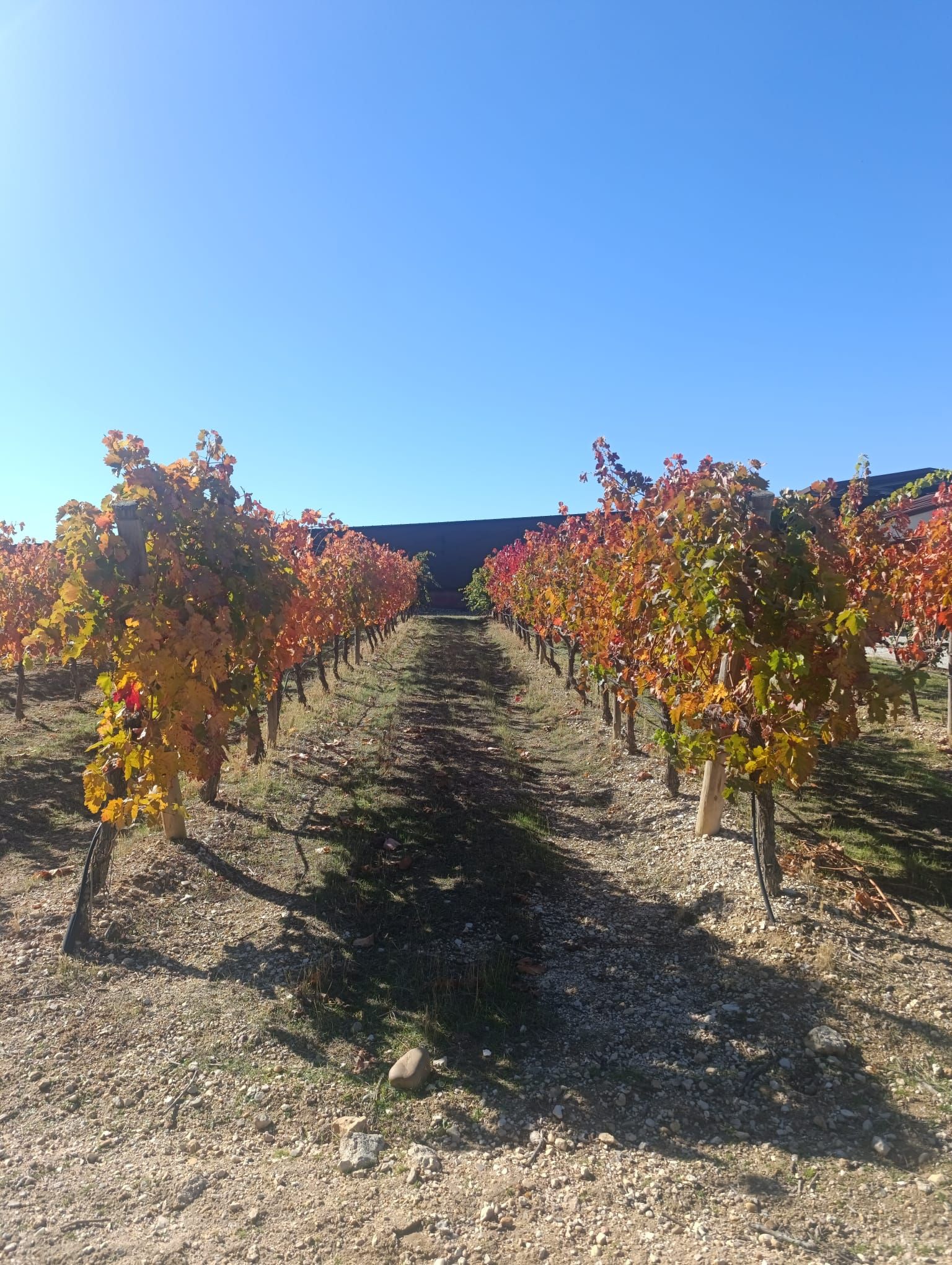
A vineyard doesn't read the calendar and politely produce the same fruit on September 20th every year. It gets rain. Or doesn't. It gets heat. Wind. Hail. Disease pressure. Cold nights. Warm nights. A weird spring. A stupidly hot August.
Then someone has to decide when to pick.
And that decision changes everything.
So when you're on a wine tour and you ask a question and the answer begins with “it depends”, don't switch off.
That's usually where the interesting bit starts.
Ask: “Depends on what?”
Because that takes you further into the Room of Depends.
And that's where wine gets interesting.
Wine isn't a recipe.
It's judgement.
And sometimes the most knowledgeable answer a winemaker can give you is the least satisfying one:
It depends.