La Palma: Wine at the Edge of the World

There are islands you visit for the beaches. Islands you visit for the food. Islands you visit because someone told you there was a volcano, and you thought, well, why the hell not?
And then there is La Palma.
La Palma is the kind of place that makes you realise an island can have several personalities and still somehow remain itself. Green and damp on one side, dry and volcanic on the other. Pine forest, black ash, Atlantic cloud, old vines, new lava. A place where you can drive through a mountain and emerge into an entirely different climate.
And, naturally, there is wine.
An island divided in two
The first thing to understand about La Palma is that you shouldn't really think of it as a north-versus-south island.
The mountain spine running down its middle creates something much more interesting: east and west.
The north-easterly trade winds arrive carrying moisture from the Atlantic and slam into the island's mountains. Clouds gather, the air rises, cools and deposits its moisture. The eastern slopes become green, humid and frequently shrouded in cloud.
Then the air crosses the mountains, descends and warms.
The west gets the leftovers.
Which is to say, sunshine.
This is the Föhn effect in action: one side gets the rain, the other gets the warm, dry air. The same island can therefore give you drizzle in the east and blue skies in the west within the time it takes to drive through the Cumbre tunnel.

For wine, that's rather important.
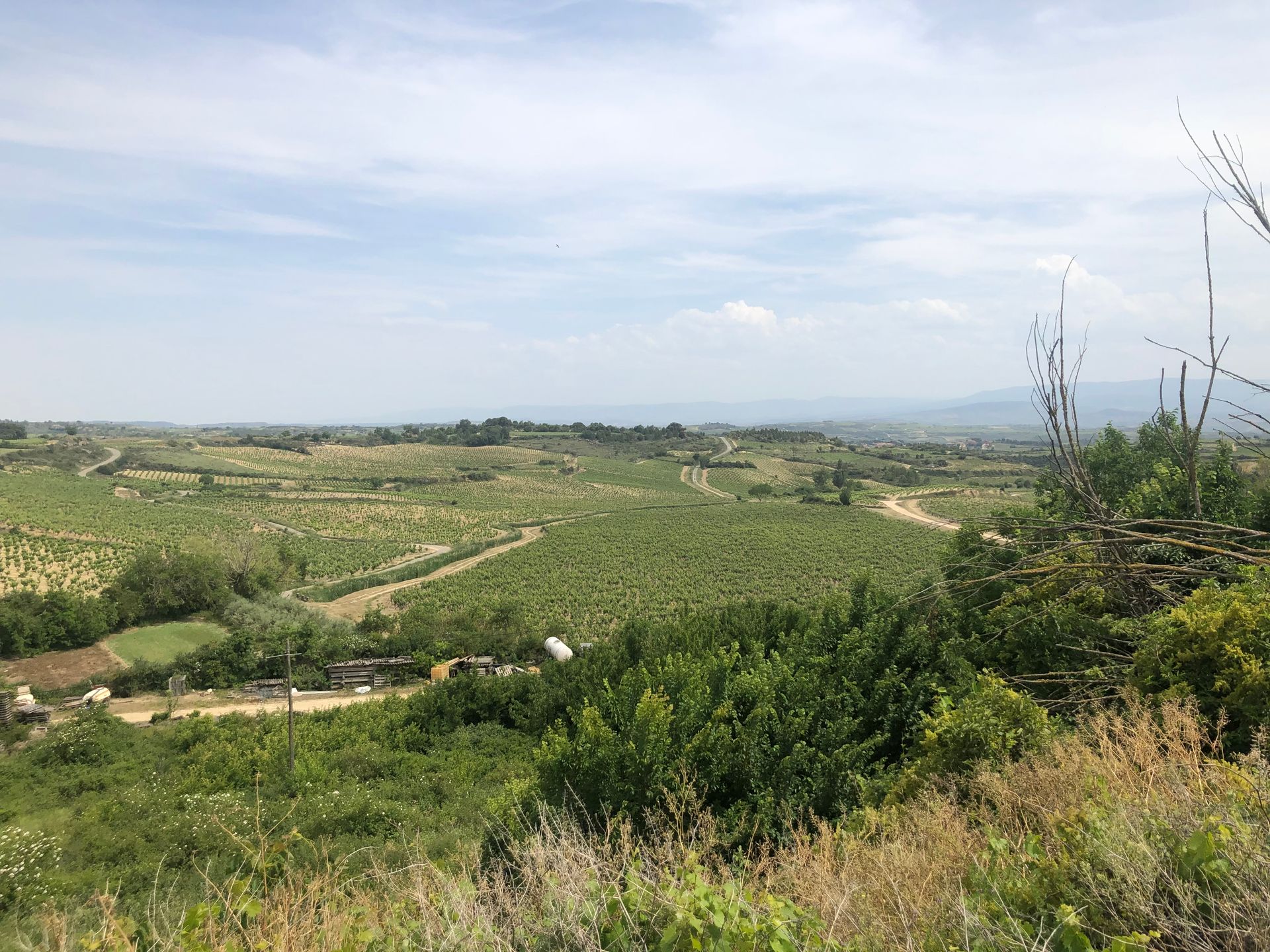
Because La Palma isn't really one terroir. It's a collection of them, stacked vertically and horizontally across an island that is barely big enough to look complicated on a map.
The DO La Palma divides the island into three subzones: Fuencaliente, Hoyo de Mazo and Norte.
Three zones. Three personalities.
Fuencaliente
Down in the south, everything gets darker.
This is volcanic country. Young soils, black picón, lava and an almost lunar landscape around the volcanoes. The climate is comparatively dry and sunny, and the vineyards have learned to live with wind, heat and very little rainfall.
Here, Malvasía is king.
The variety has a serious history on La Palma, particularly in its naturally sweet form. This was once a wine with an international reputation, shipped across the Atlantic centuries before anyone had invented Instagram to tell people about it.
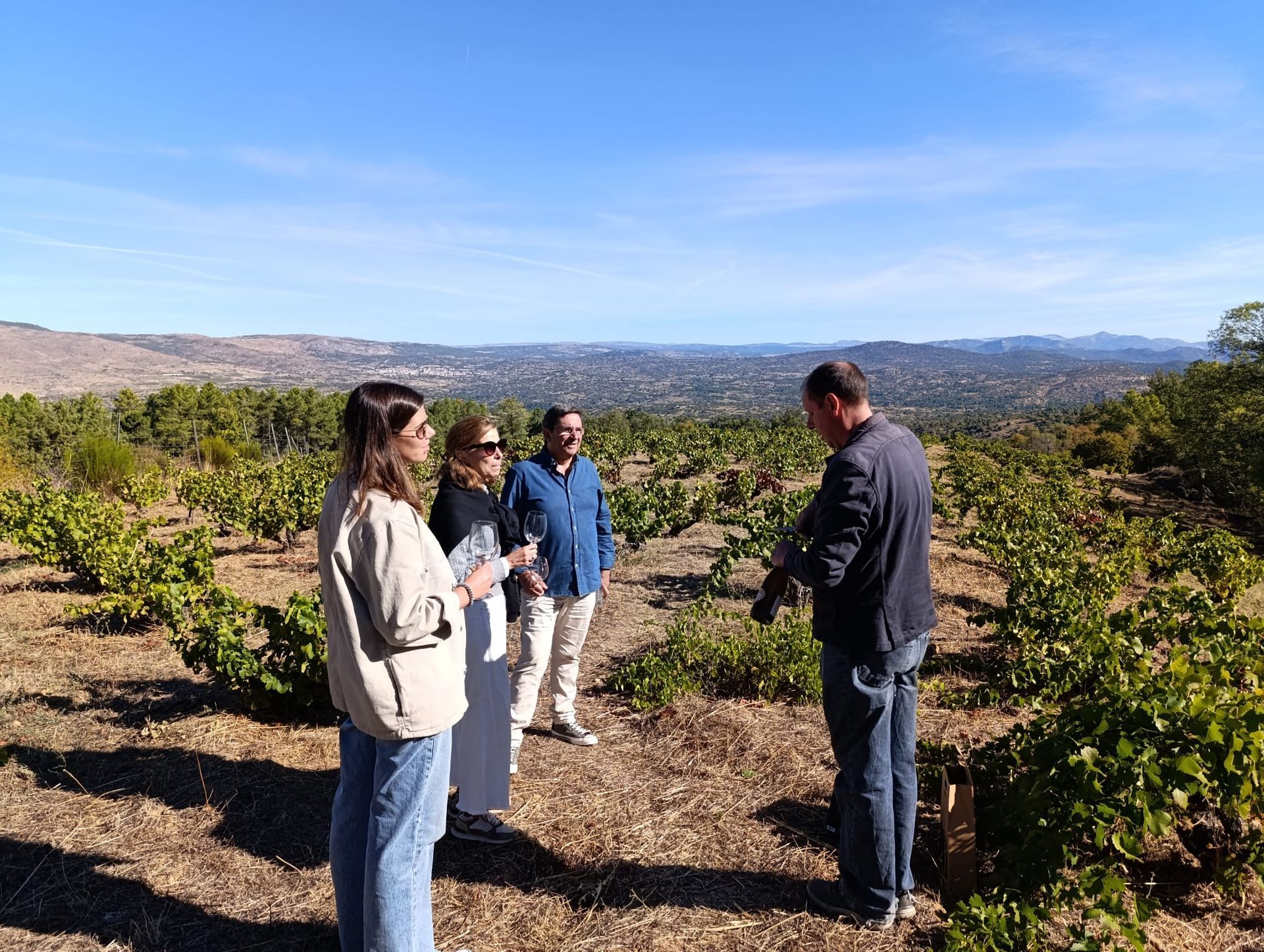
The vines themselves are often trained low to the ground, protecting them from the wind and making the most of the heat stored in those volcanic soils.
And this is where you'll find some of the island's most interesting producers.
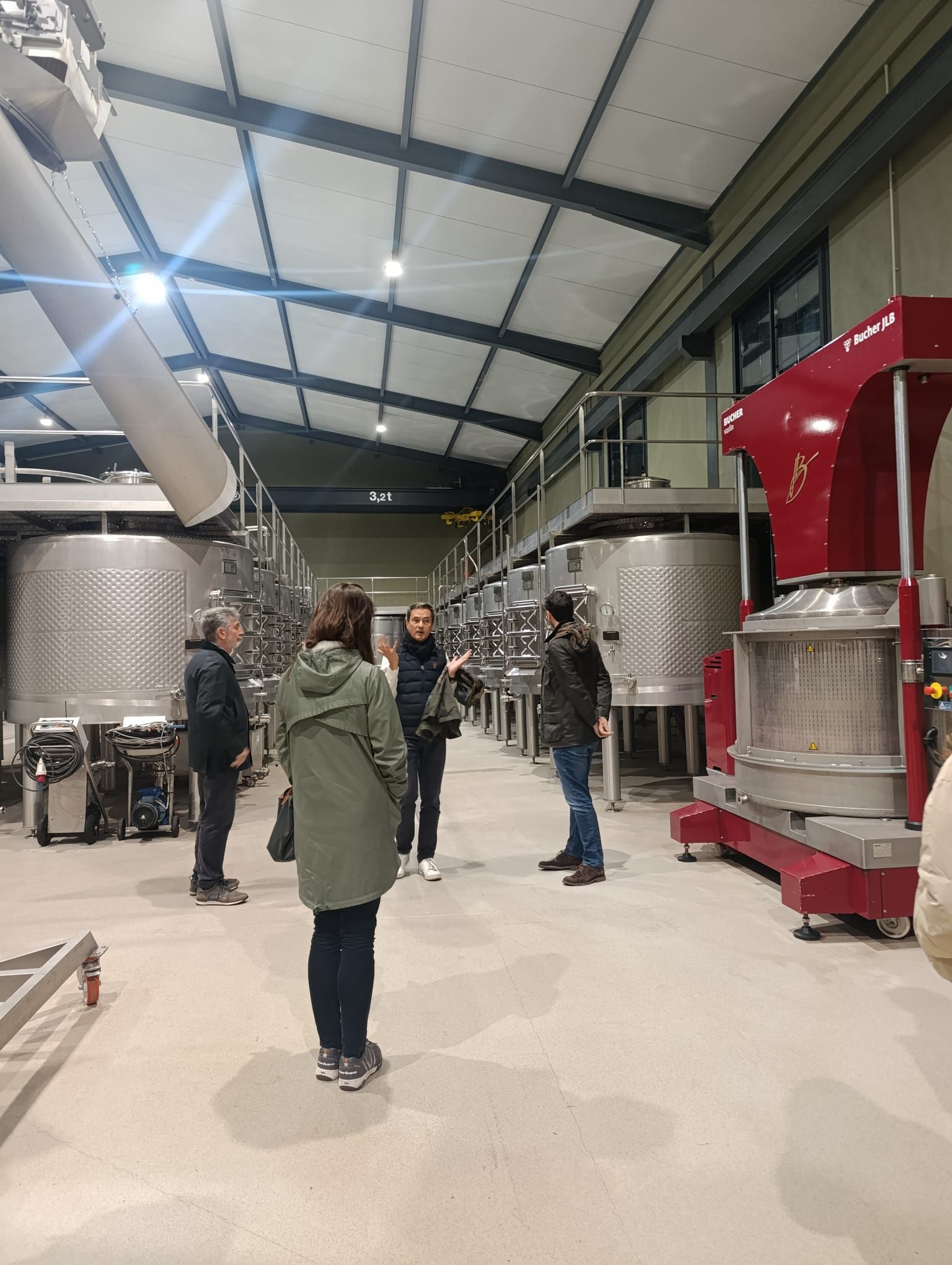
Llanovid S. C. L. Bodegas Teneguía, for example, is something of an institution. Founded as a cooperative in 1947, Teneguía became the largest winery in the Canary Islands, working with hundreds of growers and processing hundreds of tonnes of grapes.
It's the sort of place that reminds you that La Palma's wine story isn't just about tiny natural-wine darlings and forgotten grape varieties. There was — and still is — a proper agricultural wine industry here.
But then there is Victoria Torres Pecis.
And this is where things get really interesting.
Victoria is the fifth generation of her family to make wine, with the winery dating back to 1885. She works with old, often ungrafted vines and local varieties across a remarkably diverse collection of sites. Her wines have the sort of purity and intensity that make you stop talking for a minute.
There is something wonderfully unfashionable about them. They don't taste like someone decided what modern wine should taste like and then designed one. They taste like La Palma.
Black volcanic earth. Atlantic influence. Old vines. Indigenous varieties. Time.
Hoyo de Mazo
Cross over to the eastern side and the landscape changes.
More humidity. More vegetation. More influence from those Atlantic trade winds. The soils are volcanic, but older and more developed than the young volcanic landscapes of the south.
The wines tend to be fresher and lighter on their feet, with varieties including Listán Blanco, Listán Negro, Negramoll, Albillo and others finding their place among the vineyards.
It is a good reminder that "volcanic wine" doesn't automatically mean big, dark, smoky and brooding.
Sometimes volcanic wine is simply fresh.
Sometimes it is floral.
Sometimes it tastes like the Atlantic has wandered into the vineyard and decided to stay for lunch.
The North
And then you reach the north.
This is where La Palma starts to feel almost stubborn.
The vineyards are scattered across steep slopes, terraces and deep ravines, with some reaching between 500 and 1,500 metres. The soils are older, deeper and more developed, and viticulture becomes an exercise in patience, altitude and occasionally sheer bloody-mindedness. Here is where we discuss the vineyards being above or below the cloud. The cloud sits at approximately 900 metres. The vineyards below have a cooler, more humid climate and those above, less humidity and more heat, so all this talk about altitude equating to cooler climates can be forgotten when you're talking wine in La Palma.
And in the North, the varieties change too.
Listán Blanco. Albillo. Negramoll. Almuñeco. Prieto.
And then there is Vino de Tea.
The strangest wine on the island
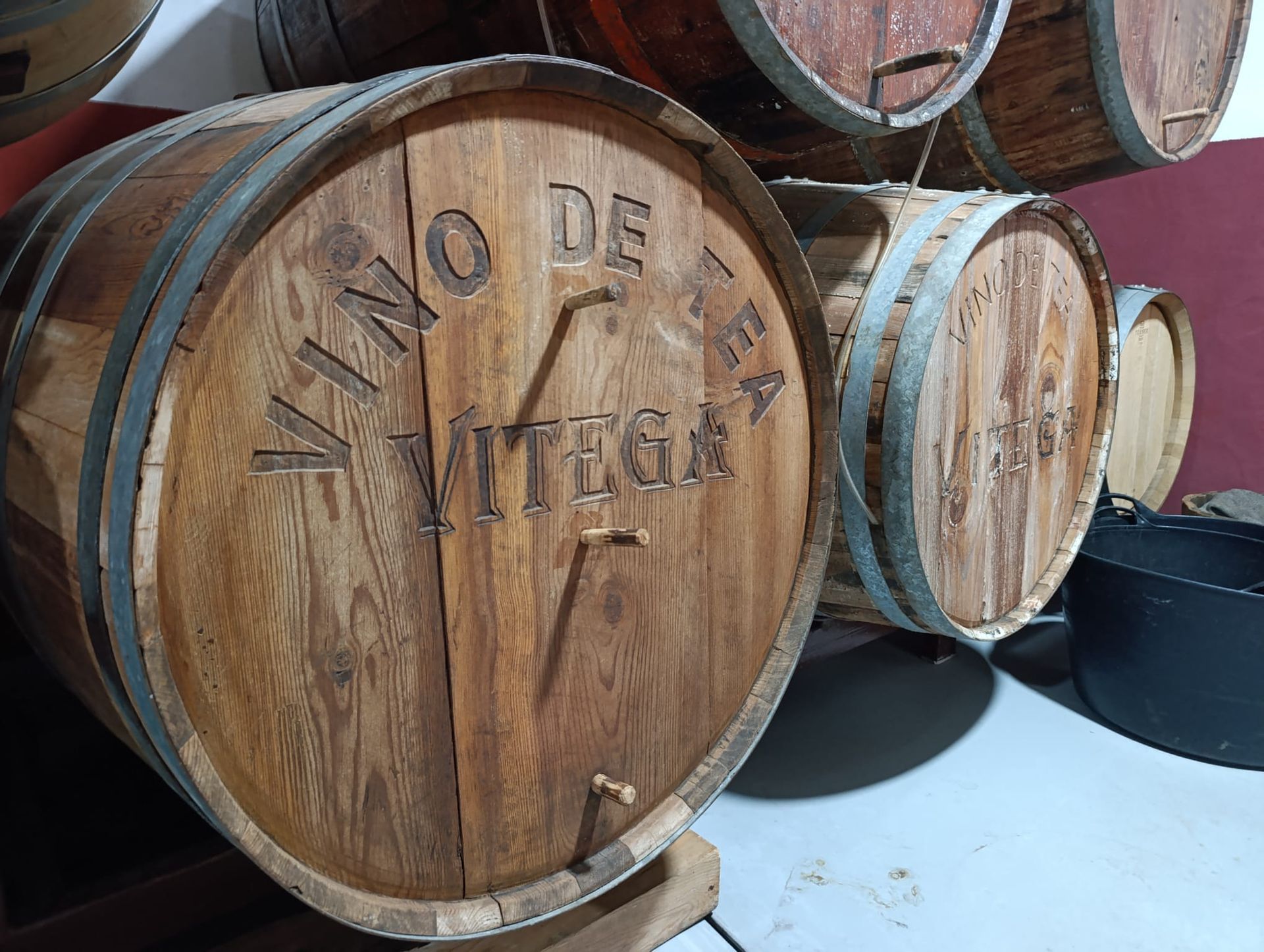
We tried Vino de Tea at VITEGA, and it is one of those wines that doesn't politely ask whether you like it.
It simply arrives.
Tea is the heartwood of the Canarian pine, and traditionally the wine was stored in vessels made from it. The wood imparts a resinous, pine-like character to the wine, something closer to walking through a forest than anything you are likely to find in a standard wine textbook.
VITEGA has played an important role in keeping the tradition alive. The family winery has been making Vino de Tea since the 1990s, and its wine even picked up gold at the 2025 CINVE competition.
And here's the thing.
You can understand why people stopped making it.
The modern wine world spent decades trying to make everything cleaner, purer, fruitier and more internationally recognisable.
Vino de Tea basically says:
No.
We have pine barrels.
The wine tastes like pine.
That's the point.
And increasingly, people are beginning to understand that this isn't a flaw to be corrected. It's heritage.
There is now serious academic work documenting Vino de Tea as a unique form of food and cultural heritage, while the producers and local institutions are pushing to preserve and elevate the tradition.
And perhaps that is exactly where wine is heading.
Not towards making everything taste the same.
Towards finding the things that could only have happened here.
From old wine to new wine
The perception of Canarian wine has changed enormously.
For a long time, La Palma was better known for its history than for what was happening in its cellars. The island had the vineyards, the old varieties, the volcanic soils and the stories, but much of the wine remained local.
There is a danger, of course, in romanticising that.
Tradition doesn't automatically equal quality.
Old vines don't automatically make great wine.
And volcanic soil is not a magic ingredient that gets you out of doing the work.
But something is happening on La Palma.
People are taking the old material seriously.
The varieties. The vineyards. The farming. The forgotten techniques.
And they're combining them with better viticulture, better understanding and a willingness to make wines that don't need to apologise for where they come from.
That is why producers like Victoria Torres Pecis matter.
Why VITEGA matters.
Why Mergus matters.
Why Vega Norte matters.
And if you find yourself in Tijarafe, go and spend some time at La Vinoteca de Vega Norte. It's the sort of wine bar that makes travelling for wine worthwhile: local bottles, local people, and the opportunity to actually drink the place rather than simply photograph it.
The future of La Palma's wine isn't necessarily going to be about producing more.
It probably shouldn't be.
This is an island of difficult vineyards, tiny parcels, old vines and limited production. Its strength is precisely that it doesn't need to become another Rioja.
The opportunity is to become more La Palma.
More distinctive. More local. More confident.
A place where Vino de Tea isn't an oddity but an inheritance. Where Malvasía isn't just a historical footnote. Where old varieties aren't ripped out because nobody recognises their names. Where the person making the wine matters as much as the label on the bottle.
Because ultimately, that's what makes La Palma interesting.
Not the volcanoes.
Not the weather.
Not even the wine.
It's the people who are still willing to work the impossible little pieces of land, preserve something their grandparents understood, and then put a bottle on the table and say:
Try this. This is where we're from.
And finally, a personal shout-out.
If you're heading to La Palma and want to understand the island beyond the obvious tourist trail, look up Diego at UKÉN ENOTURISMO. Diego is one of those people who seems to have an answer to every question you can throw at him and, more importantly, knows the stories behind the answers. His work brings together wine, landscape, history and the people who keep all three alive.
A fountain of knowledge, a proper local connection, and exactly the sort of person you want to know when you're travelling somewhere like La Palma.
Because the best way to understand a wine region isn't always to drink more wine.
Sometimes it's to find the person who can tell you why it tastes the way it does.